Robotic Ice Cream Kiosks: Compact, High-Impact Dessert Hubs
Robotic Ice Cream Kiosks: Compact, High-Impact Dessert Hubs
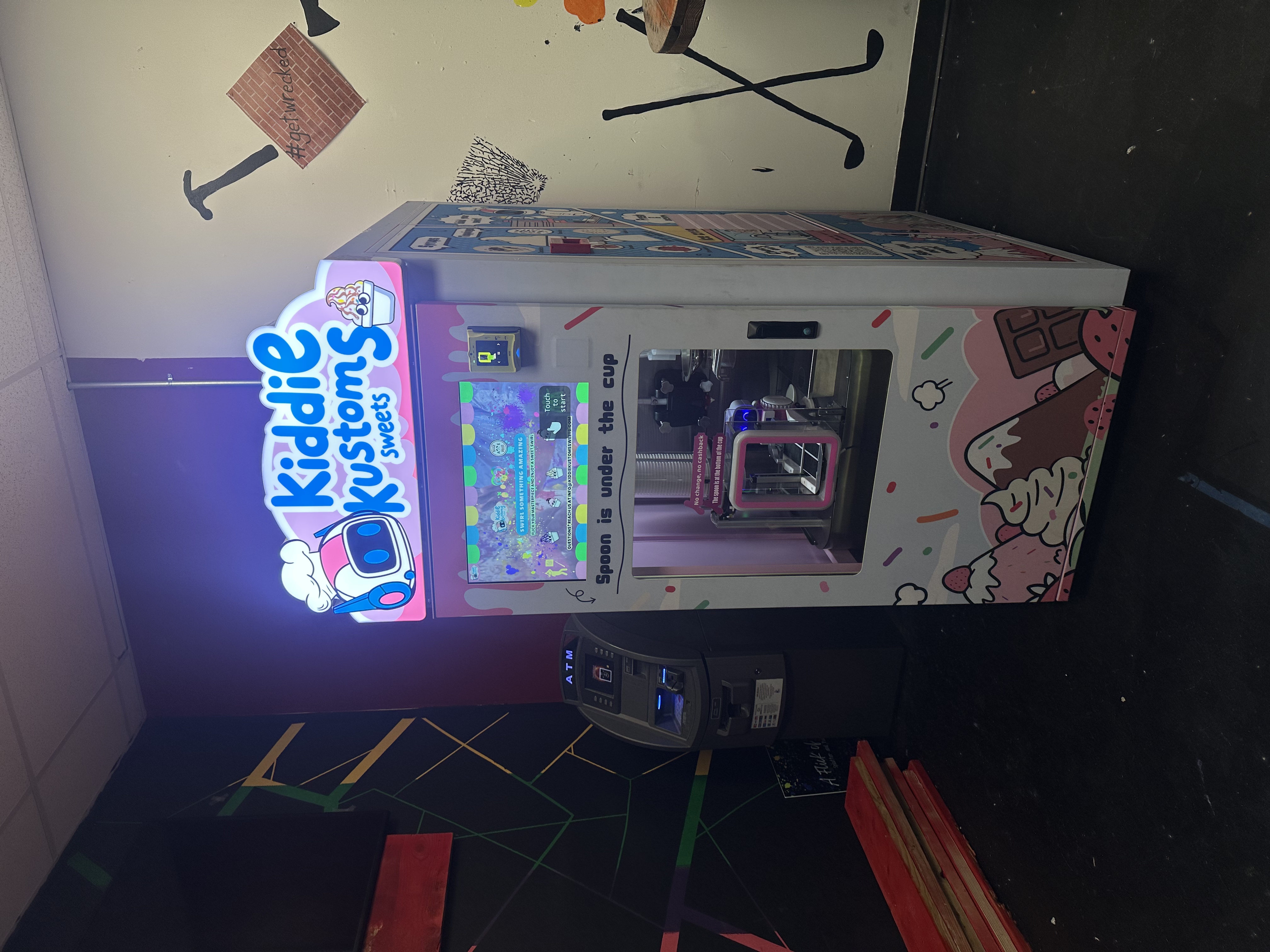
A robotic ice cream kiosk packages robotic vending technology into a self-contained, branded station that can be placed in malls, entertainment venues, and family destinations. Unlike standalone machines, kiosks often integrate signage, lighting, queue management, and branding to create a mini dessert zone that stands out within the venue.
For U.S. operators and brands like Kiddie Kustoms Sweets, robotic kiosks represent a way to claim a defined footprint in partner venues, balancing visibility and operational simplicity.
Core Components of a Robotic Ice Cream Kiosk
Typical elements of a robotic kiosk include:
Robotic ice cream dispensing equipment at the center of the kiosk.
Branded panels and digital displays to communicate flavors, pricing, and promotional messages.
Compact footprint designed to fit corridors, lobbies, or open areas in malls and family venues.
Integrated safety and accessibility features, ensuring clear walkways and reachable controls.
This structure allows venues to dedicate a small area to dessert sales without building a full-service counter.
Venue Integration: Kiddie Kustoms Sweets Examples
In Pennsylvania’s Main Line and greater Philadelphia region, Kiddie Kustoms Sweets uses robotic ice cream kiosk-style installations to enhance the guest experience at:
Dim Sum King – where a kiosk near the entrance invites families to end their visit with robot-made ice cream.
Devon Lanes – where a compact kiosk near party lanes becomes a focal point for birthday celebrations.
Junior Playland – where the kiosk fits into the playland’s fun, colorful aesthetic.
These kiosk placements demonstrate how a small footprint can generate outsized impact through visual appeal, convenience, and social sharing.
Compliance and Site Planning
Implementing a robotic ice cream kiosk requires careful planning around:
Site permissions and agreements with property owners covering electricity, maintenance, and revenue sharing.
Local business licensing and food establishment regulations, which vary by state and municipality.
Health department oversight, including inspections, sanitation protocols, and temperature monitoring.
Operators like Kiddie Kustoms Sweets collaborate with venues to ensure the kiosk’s physical layout respects zoning, fire safety, and accessibility standards, while equipment design and operating manuals align with health regulations.
Benefits for U.S. Venues
Robotic ice cream kiosks offer host venues:
Brandable, immersive dessert zones without requiring a full kitchen.
Stable, predictable dessert revenue, especially in high-traffic periods.
Guest engagement through visual robotics and interactive ordering.
Marketing assets, including photos, videos, and testimonials.
For venues such as Flick of Wrist, Tilted Axes, and X-Golf Garnet Valley, kiosk installations can complement the core activity—whether axe throwing, mini-golf, or indoor sports—by adding a family-friendly dessert station that fits seamlessly into the experience.
Strategic Role in Automated Dessert Retail
For brands, robotic ice cream kiosks play a strategic role by:
Anchoring presence across multiple venues in a given region.
Providing standardized formats that simplify operations and scale.
Supporting data-driven decision-making through consistent sales and usage metrics.
Kiddie Kustoms Sweets leverages kiosk deployments as part of its broader strategy to move from initial concept validation to scalable, branded growth in automated dessert retail within the U.S. market. By integrating robotic kiosks into carefully chosen venues, the brand demonstrates how compact, automated dessert stations can deliver both memorable guest experiences and sustained revenue performance.