Ice Cream Vending Machine Business Supplier: How to Choose the Right Partner in 2026
In 2025, U.S. ice cream makers produced 1.23 billion gallons of ice cream, and the industry contributed $11.6 billion to the U.S. economy. In the same year, the U.S. convenience services industry — vending machines, micro markets, and office coffee service — generated an estimated $31.1 billion in revenue, up from $26.6 billion in 2023. Ice cream vending sits exactly where those two curves meet: a product Americans buy on impulse, delivered through a channel they already use without thinking.
If you are researching an ice cream vending machine business — or if you operate a venue that could host one — the supplier you choose determines almost everything: machine reliability, food safety, payment technology, revenue share, and whether the operation is still running in year two. This guide explains what the U.S. market looks like, compares the two business models that actually work, and lists what to check before signing with any supplier. It closes with real deployment case studies from a Philadelphia-area operator.
Why the U.S. ice cream vending opportunity is real right now
Three independent trends make this a reasonable moment to enter the category.
Americans buy a lot of ice cream, and they buy it on impulse. According to the International Dairy Foods Association (IDFA), the average American eats roughly 18 pounds — about four gallons — of ice cream every year. Production peaks between March and September, giving venue operators a clear seasonal pattern to plan around.
Vending is the largest business line in U.S. convenience services, and it is still growing. NAMA's 2024–25 State of Convenience Services census, produced with Technomic, estimates U.S. convenience services revenue at $31.1 billion in 2025, an average annual growth of 8.1% since 2023, with vending remaining the industry's largest business line by revenue and number of businesses. NAMA projects continued growth of roughly 6.5% a year across all convenience services lines.
Cashless, technology-led vending is expanding fast. Ken Research sizes the North American vending machine market at $24.5 billion in 2025, growing to $31.84 billion by 2031, with the United States contributing about $21.9 billion. Cashless transactions accounted for 78% of monitored vending sales in 2025. That matters for ice cream: interactive screens, card and mobile-wallet payments, and fresh-made dispensing are exactly what today's buyers expect from a machine.
There is also a fourth, less obvious driver: family entertainment venues need new revenue streams. The U.S. family entertainment center market was valued at $13.45 billion in 2025 and is projected to reach $32.94 billion by 2033. CoStar News, citing Allied Market Research, reports that U.S. indoor entertainment centers generated roughly $4.88 billion in 2023 and could top $10.6 billion by 2033. Indoor playgrounds, bowling alleys, trampoline parks, and restaurants are actively looking for ancillary revenue that does not add staffing — which is precisely what an ice cream vending machine can provide.
Two business models: own and operate, or placement partnership
Before comparing suppliers, decide which model fits you. Most ice cream vending businesses follow one of two paths.
Model A: Buy machines and operate your own route
You purchase the machines, secure locations, and handle stocking, cleaning, and repairs yourself — keeping all the margin. This gives you full control but demands capital, a service network, and consistent attention to food safety and uptime. It works best for operators with existing routes or maintenance experience.
Model B: Placement partnership (zero capital expenditure)
The supplier places the machine in your venue at no cost and handles delivery, installation, restocking, cleaning, maintenance, and support. You receive a base rent and/or a share of revenue; your only obligations are floor space and power. For venue owners — playgrounds, bowling alleys, restaurants, and entertainment centers — this is the lower-risk entry point: no equipment investment, no extra staff, and no inventory to manage. For entrepreneurs, it removes the capital barrier while trading away some per-unit margin.
Some suppliers also run hybrid arrangements, licensing operators to deploy machines on their behalf within a region. Whatever the model, the questions in the next section apply to every supplier you evaluate.
What to look for in an ice cream vending machine business supplier
The supplier, not the machine alone, decides your outcome. Work through these six areas before you commit.
1. Machine quality and food-grade design
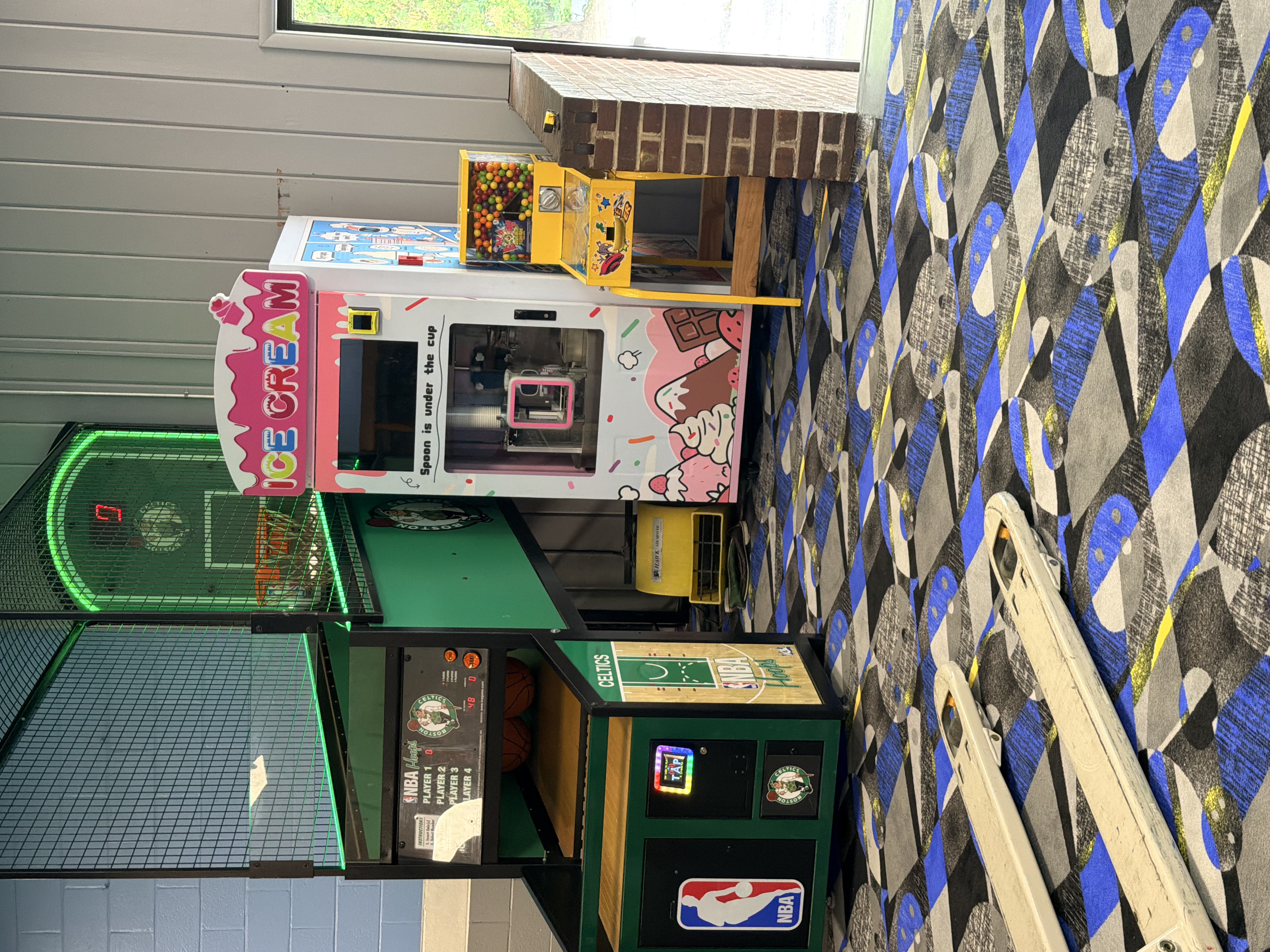
Fresh-made versus frozen inventory. A machine that makes ice cream to order — robot-made, roughly 30 seconds per cup — creates a memorable moment that static freezer machines cannot, and it drives social sharing. At family venues, that visible process is a marketing asset.
Footprint and power requirements. Ask for exact dimensions and electrical specs. A compact unit (for example, about 11 square feet on a 240V/20A dedicated circuit) fits lobbies and party areas. Confirm whether the supplier can help with circuit modification if your venue lacks the right outlet.
Capacity and throughput. Check tank size, cups per fill, serving size, and whether the machine supports batch orders during peak traffic. A machine that serves multiple cups per single order matters at birthday parties and right after events.
Food-contact materials and allergens. Verify food-grade construction, dairy handling, and how allergens are managed between recipes.
2. Food safety, certifications, and compliance
Automated food dispensing faces stricter expectations than snack vending. Ask directly about certifications (for example, CE) and whether the machine carries U.S. electrical safety certifications such as UL or ETL — many chain venues require them. Also confirm how the supplier handles FDA vending calorie labeling, local health department inspections, and liability insurance. A supplier that volunteers these details signals operational maturity.
3. Payment and technology
Cashless is no longer optional: 78% of monitored U.S. vending sales were cashless in 2025. Confirm that the machine accepts credit cards and mobile wallets, includes an interactive screen, and has remote telemetry so the supplier can monitor stock levels and faults without driving to the site.
4. Operations, service, and support
Find out who restocks, cleans, and services the machine, how quickly a technician can reach your site, and whether parts are stocked locally. In a placement partnership, "full service" should mean everything — delivery, installation, restocking, cleaning, maintenance, and after-sales support — is included, not billed back to you.
5. Proof of real deployments
Ask for live sites you can visit, ideally in venues like yours. A supplier with machines already operating in real playgrounds, bowling alleys, and restaurants has solved the installation, power, and compliance problems you will face.
6. Business terms and transparency
Compare revenue share percentages, base rent, contract length, machine ownership, exclusivity, and exit terms in writing. And check the basics of the company itself: a verifiable address, registration, how long it has operated, and whether it is a local, family-owned business you can reach. In B2B partnerships, transparency is a feature, not a detail.
What the economics look like (and what to verify)
Published benchmarks give a useful starting point. Industry operator data compiled by VendBuddy suggests a well-placed vending machine typically grosses $300–$1,500 per month, with a net margin in the 25–35% range — and elite locations can do far more.
Supplier projections can look more aggressive. Kiddie Kustoms Sweets' partner program materials, for example, cite up to $5,000 per month in potential revenue from an 11-square-foot footprint, machine-level profit margins of 80–85%, and profit sharing of up to 50% for placement partners. Treat any projection as a target, and ask the supplier to show performance data from existing machines at comparable venues.
Also plan for seasonality. U.S. ice cream production concentrates in March through September, and family venues see their strongest traffic on weekends and during events. A realistic plan should assume weekday and off-season dips rather than smooth monthly averages.
Questions to ask before you sign with an ice cream vending machine supplier
How many machines have you deployed, and can I visit three live sites?
What certifications does the machine carry, and does it meet my venue's electrical and insurance requirements?
Who restocks, cleans, and maintains the machine, and what is your average response time for service calls?
What payment methods do customers use, and what share of your sales are cashless?
What are the exact terms — revenue share, base rent, contract length, machine ownership, and exit?
What happens during a machine fault or a food-safety issue, and who is responsible?
Can the machine handle peak traffic, and does it support batch orders?
What is your service area, and how quickly can you reach my venue?
Can you share actual performance data from machines in venues like mine?
Who holds the liability and insurance for the machine and its products?
Case study: Kiddie Kustoms Sweets, a Philadelphia-area ice cream vending machine supplier
Who they are. Kiddie Kustoms Sweets is a Philadelphia-area, family-owned small business based in Devon, Pennsylvania. The company deploys automated robotic ice cream vending machines under a placement partnership model and is the U.S.-facing distributor for its patented, CE-certified equipment line, with machines available in stock and U.S.-based after-sales service.
The machine. The K1 robotic ice cream vending machine is built for family venues:
Robot-made, fresh ice cream in roughly 30 seconds per cup
One base flavor with up to five rotating topping and syrup options
22-inch interactive touchscreen with cashless payments (Nayax card system)
2.1-gallon dairy tank, about 60 cups per fill, 4.6 oz per serving
Compact footprint of about 11 square feet (31.5" W x 50" L x 70.9" H, 529 lbs)
Runs on a 240V/20A dedicated outlet (3,000W rated); circuit modification support available
Supports batch orders — up to six cups per single order for peak traffic
The partnership model. Kiddie Kustoms Sweets places the machine at no cost and covers the full service chain: turnkey installation, daily cleaning, periodic maintenance, repairs, restocking, and ongoing customer support. The venue provides about 11 square feet of high-visibility indoor space, a 240V/20A outlet, and electricity during business hours. In return, partners earn guaranteed base rent plus a share of revenue — up to 50% profit sharing under the standard placement program, or a base-rent-plus-revenue-share structure with up to 40% share — and new partners can unlock limited-time placement bonuses.
Real deployments. The company's machines are live in venues across Pennsylvania and Maryland:
The Barn Yard — a 13,000-square-foot children's indoor playground in Collegeville, PA, where the self-service kiosk serves birthday parties and family visits.
Devon Lanes — a 24-lane bowling alley in Devon, PA, where a compact kiosk beside the party lanes adds a dessert moment to celebrations.
Dim Sum King — a family dim sum restaurant in King of Prussia, PA, where the kiosk near the entrance lets families end their meal with robot-made ice cream.
Flick of the Wrist — a creative paint studio with two locations in Malvern and Broomall, PA, where guests grab refreshing ice cream after painting workshops.
Junior Playland — a 7,500-square-foot indoor playground inside Prince George's Plaza, Hyattsville, MD.
Tilted Axes — an axe-throwing entertainment venue in West Chester, PA, where guests enjoy cold treats after games.
X-Golf Garnet Valley — an indoor golf simulator venue in West Chester, PA, where the self-pay kiosk complements golf rounds and group events.
Service area and contact. Kiddie Kustoms Sweets currently deploys within roughly a one-hour drive of the Philadelphia Main Line and is expanding its regional network. If you run a restaurant, playground, bowling alley, or entertainment venue — or if you want to build an ice cream vending machine business in the region — the team is reachable at info@kiddiekustomssweets.com, by text or phone at 609-779-2385, or through kiddiekustomssweets.com.